


In any business, success is rarely the result of one individual working alone. It is the outcome of coordinated effort—people supporting each other, sharing responsibilities, communicating transparently, and working toward the same objective. Like a omgems teammates. Effective team coordination is more than cooperation; it is the foundation of productivity, innovation, trust, and business growth.
This blog explores why coordination among teammates matters, how it improves performance, and the strategies businesses can use to create a culture of alignment and collaboration.
Why Team Coordination Matters:
Every business, large or small, depends on people working together. When coordination is strong:
When omgems started, it was only in the hands of owner MiteshSangani. Today, 20 employees are working together. Slowly, omgems is moving forward with teammates.
Work flows more smoothly, Misunderstandings are reduced, Responsibilities are clearly defined, Everyone understands the goals, Decisions are made efficiently
Without coordination, tasks overlap, deadlines are missed, and frustration increases. A coordinated team, on the other hand, moves like a well-tuned engine—each part contributing exactly where needed.
The Role of Communication in Team Coordination
When teammates effectively coordinate, they avoid misunderstandings, reduce redundancy, streamline processes, and create an atmosphere where collaboration becomes a natural part of daily workflow instead of a forced obligation.
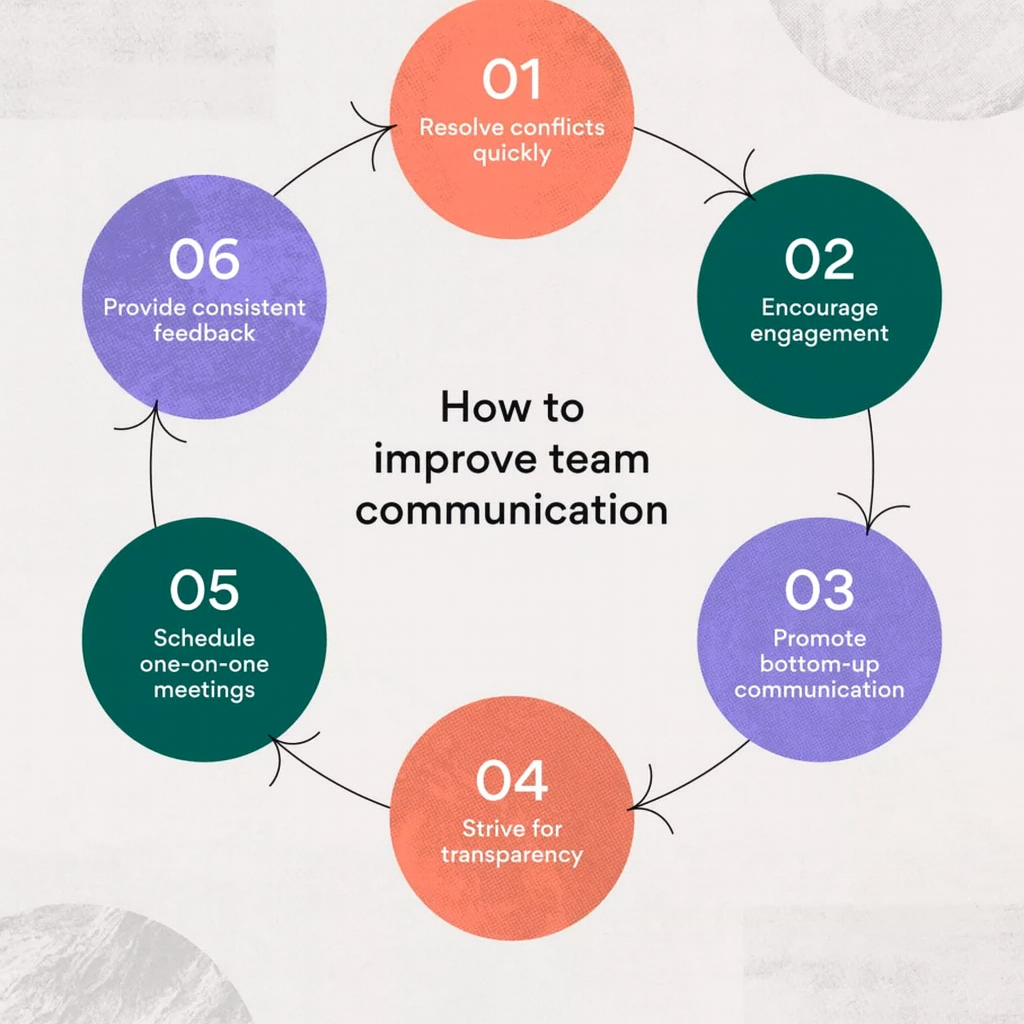
Communication is the heart of teamwork. When communication is clear and consistent, people know what to do, how to do it, and when to finish it.
Strong communication includes:
Open dialogue
Team members feel safe to express opinions, ask questions, and raise concerns.
Regular updates
Sharing progress helps keep everyone aligned on deadlines and milestones.
Honest feedback
Constructive comments improve performance and strengthen relationships.
Listening
True coordination depends as much on listening as on speaking—understanding others’ viewpoints enriches solutions.
When communication channels are open, the workplace becomes more efficient and less stressful. This leads to an environment where feedback is welcomed rather than feared, and everyone understands not just what they are doing, but why they are doing it and how their individual work supports the broader company objectives.
Defining Roles and Responsibilities
A team performs best when everyone knows their role. Coordination suffers when tasks are vague or duplicated.
Clear roles prevent confusion and help teammates support each other.
A marketing specialist should not be doing accounting tasks, and designers should not be handling client negotiations unless that is explicitly part of their position.
For example, in omgems, all sections are separate and each section has a different manager. For example, Owner Mitesh Sanghani, Manager Head Abhishek Gondaliya, Accounting Head Harsh Savaliya, Studio Head Bhavin Chodvadiya, Digital Marketing Head Priyank Mangukiya, and Sales Manager Anjali and other staff members. All work independently but ultimately work as a team.
Businesses can improve clarity by:
- Providing written role descriptions
- Outlining responsibilities during onboarding
- Assigning clear ownership of tasks
- Ensuring accountability
When each person understands their duties, collaboration becomes smoother and more balanced. But when responsibilities are defined and understood, every person can channel their effort in the right direction without insecurity or territorial conflict.
Team Coordination Builds Trust
Trust is not simply a feeling—it is a business advantage. When teammates trust each other, they:
- Share information without hesitation
- Respect decisions
- Support one another during challenges
- Work confidently and independently
When an employee in our company makes a mistake, they are afraid, but they know that someone else will trust them and support them. When the boss explains to them how to work and how to do it.
A coordinated team sees mistakes not as failures, but as opportunities to learn. Trust reduces unnecessary oversight and empowers individuals to take initiative. Over time, this trust creates loyalty—not only among teammates but also toward the organization.
Coordination Encourages Innovation
Some people still believe that creativity is a solo activity—but real innovation often happens through interaction. When diverse minds collaborate, ideas strengthen.
A coordinated environment allows for:
- Brainstorming sessions
- Group problem solving
- Shared idea-generation
- Constructive debate
Businesses that encourage teamwork often outperform competitors because they adapt quickly, think creatively, and respond intelligently to market changes. Like Omgems has launched new platforms that are doing very well. The name of the business is TheMinimalCarbon.
Technology as a Tool for Coordination
Digital tools now make teamwork easier than ever. Platforms for communication, project management, scheduling, and document sharing help teams stay aligned regardless of physical distance.
Popular tools include:
- Task management systems
2. Shared calendars
3. Communication platforms
4. Cloud-based document apps
Technology does not replace communication—it enhances it. The key is using tools to support coordination, not complicate it. However, technology alone does not guarantee coordination. The mindset and discipline behind its use matter more than the tools themselves. Leadership is another crucial factor in team coordination.
Now, the team at omgems has created something new with the help of technology and based on its own mindset, which is Veritas Gem Laboratory. Where omgems will give you a certificate of its company with your shopping. In which the authenticity of diamonds and jewelry and all the details are available. Which you can download by going to vgllab.com.
Leadership’s Role in Team Coordination:
Leaders who foster unity rather than competition cultivate a team environment where people uplift each other rather than undermine or outperform one another for personal gain.
Strong leadership is essential. A leader should:
- Set clear expectations
- Clarify goals and priorities
- Mediate conflicts
- Encourage participation
- Recognize achievements
- Offer guidance
Good leaders create an environment where each team member feels valued, confident, and motivated. When leadership is consistent and transparent, coordination naturally improves. Teams that coordinate well do not avoid conflict; they work through it calmly, aiming for solutions rather than blame.
Encouraging Shared Vision and Purpose
A team works better when everyone understands the “why” behind their tasks. When employees connect emotionally with objectives, they put more effort into achieving them. When teammates believe in the same purpose, they work with motivation and commitment. They do not simply complete tasks for obligation; they contribute with intention.
Businesses can strengthen shared purpose by:
- Communicating the company mission
- Explaining project outcomes
- Celebrating milestones
- Demonstrating the impact of the team’s work
- A united vision turns everyday tasks into meaningful contributions.
Every employee at omgems understands their job well and does it well. Every day, everyone strives to move their company forward and wants omgems to become even bigger in the short term. The strength of well-coordinated teamwork becomes a competitive advantage that distinguishes a business in the marketplace. Coordination also enhances adaptability.
Conflict Handling and Resolution
Even in company teams, disagreements happen. But the good thing is that here the staff manages them wisely. Due to which more focus is not on the problem but on solving it. Team understanding also maintains relationships and the atmosphere also remains positive.
Benefits of Strong Team Coordination
Strong team coordination results in higher productivity. Customers get better quality diamonds, and decisions are made faster so that no work is wasted. Relationships are strengthened, and customers are more satisfied. Employees feel happier and more supported—and happy teams produce better work.
Conclusion
Business growth is not an accident—it is the outcome of people aligned in purpose and effort. Team coordination transforms a group of individuals into a powerful collective unit. Through communication, trust, clarity, leadership, and support, teams achieve more together than any single person could alone.
Strong coordination builds not just performance—but culture, innovation, and lasting success. omgems is moving down this path today.
